Here is my sermon from this Shabbat I which I cite the deep wisdom of Daniel Tiger. Unfortunately, there was an internet outage at the temple so a livestream link is not available and I’m sharing it while it is still Shabbat.
Shabbat shalom!
Here is my sermon from this Shabbat I which I cite the deep wisdom of Daniel Tiger. Unfortunately, there was an internet outage at the temple so a livestream link is not available and I’m sharing it while it is still Shabbat.
Shabbat shalom!
Here is my sermon from last night about parashat Chayei Sarah.
My sermon from Shabbat Bereshit 5784. Citations didn’t copy over. Here is the version with citations.
This week has been one of profound questions, how could this happen? What happened? Why now? When will the hostages be freed? Why?
Many of you know that one of the things that I love most about Judaism is that we are more a religion of questions than answers. And, like many of you this week I have a list of questions of my own. Why are innocent people being held captive? When will they be released? What next? How can people that I know espouse anti-Israel rhetoric and then like my social media posts? When will my red alert app stop going off? How do I get through services tonight without crying? When will I be able to sleep through the night again?
In time, I think all of our questions may very well get answered by time, by God-willing, a return of the hostages and an end of terrorism, by government inquiries, by prayer and community gathering, please God by peace, and undoubtedly, there will be new questions.
Our tradition knows questions. The 4 questions of Passover that are really one question with four answers, much of the Talmud is an intergenerational text of answers to questions that sometimes we spend hours to answer. There are also several moments in the Bible where our leaders ask really hard questions, Moses, Isaiah, and Jeremiah.
In the beginning of the book of Deuteronomy, Moses asks,
“אֵיכָ֥ה אֶשָּׂ֖א לְבַדִּ֑ טׇרְחֲכֶ֥ם וּמַֽשַּׂאֲכֶ֖ם וְרִֽיבְכֶֽם׃
How can I bear unaided the trouble of you [this people], and the burden, and the bickering!”
Isaiah, also at the beginning of the book asks about the city of Jerusalem:
אֵיכָה֙ הָיְתָ֣ה לְזוֹנָ֔ה קִרְיָ֖ה נֶאֱמָנָ֑ה מְלֵֽאֲתִ֣י מִשְׁפָּ֗ט צֶ֛דֶק יָלִ֥ין בָּ֖הּ וְעַתָּ֥ה מְרַצְּחִֽים׃
Alas, she has become a harlot, The faithful city That was filled with justice,
Where righteousness dwelt—But now murderers.
And the prophet Jeremiah, our tradition teaches, wrote the book of Lamentations. He asks:
אֵיכָ֣ה ׀ יָשְׁבָ֣ה בָדָ֗ד הָעִיר֙ רַבָּ֣תִי עָ֔ם הָיְתָ֖ה כְּאַלְמָנָ֑ה…
Alas! Lonely sits the city Once great with people! She that was great among nations Is become like a widow…”
Though sometimes this word “eicha” is translated as alas, it is really a question word. How, why, what will be? We are living in a moment, too, where too we ask eicha?
But there’s another eicha. The Hebrew word eicha is spelled alef, chaf, yud, hey. This spelling of the words of Moses, Isaiah, and Jeremiah, is also the same as the spelling, at that moment when the first human being takes a bite of the forbidden fruit in the Garden of Eden. God calls to this first being and says ayekha – alef, chaf, yud, hey, humans where are you? Rav Joseph Soloveitchik suggests that this Genesis ayekha is the answer to Jeremiah’s question. “That is what the Midrash is saying. Jeremy asks, Eicha, how can it be? And God answers- A’Yeka, [and this is my own spin because Bnei Yisrael humanity sins, and Rav Soloveitchik continues] they have separated from Me, and instead of closeness, there is distance between us.”
It is beyond our comprehension the answers to these questions in this terrible moment. So we ask eicha, how can there be so much terror, so much sadness? The answer is in how we respond to ayekha – where are you? How are you standing strong to support Israel? How are you standing up to evil, antisemitism, and the anti-Israel rhetoric? How are you contributing to the Jewish future that will shine brightly after this war?
And so a reminder of someone who answered the call, where are you? with fierceness and maybe with its own question, why not? This week we mark the yahrzeit of Rabbiner Regina Jonas. Rabbi Jonas was the first woman to be ordained a rabbi in the 20th century. She was born in Berlin in 1902 and studied at the Hochschule für die Wissenschaft des Judentums, a liberal, nondenominational seminary. Pursuing her dream as obstacles found her again and again, Rabbi Jonas eventually was ordained a rabbi in 1935. Rabbiner Jonas died at Auschwitz and she was nearly forgotten by history until her papers were discovered after the fall of the Berlin wall. Rabbi Jonas understood the power of humanity, even as she saw the very worst of it. About her calling to the rabbinate though, Rabbiner Jonas teaches us:
… if I must say what drove me…to become a rabbi, two elements come to mind: My belief in the godly calling and my love for people. God has placed abilities and callings in our hearts, without regard to gender. Thus each of us has the duty, whether man or woman, to realize those gifts God has given. If you look at things this way, one takes woman and man for what they are: human beings.
Ayekah – where are you? How are you coping? How are you helping yourself? How are you helping Israel? This Shabbat there are so many questions, the answers will come in how each of us chooses to show up for one another, for Israel, for the Jewish people, and for God.
Amen.
I sent this email to my congregation:
Dearest Chaverim,
Our congregation does not normally communicate on Shabbat. This is not a normal moment.
On Shabbat and a festival day on our Jewish calendar and on the 50th anniversary of the Yom Kippur War on the Gregorian calendar, Israel was drawn into war to defend its citizens. Hamas terrorists launched thousands of rockets and infiltrated into Israel murdering, kidnapping, and injuring countless numbers of people. Thousands of our siblings are in bomb shelters and thousands more are serving or preparing to enter into duty with the Israel Defense Forces to protect and defend our homeland. Temple Beth Shalom unequivocally stands with the people of Israel.
I am in touch with the families of our students in Israel participating in URJ’s Heller High who were in Jerusalem for Shabbat, they are safe. In addition, many of us have family and friends in Israel and we pray for them. Here in Austin we are in touch with our community partners on Dell JCC campus and our region to provide for our safety and security.
Please stay informed as this situation continues to unfold. Please pray for peace in your own words or with these from our prayer book:
O Heavenly One, Protector and Redeemer of Israel, bless the State of Israel which marks the dawning of hope for all who seek peace. Shield it beneath the wings of Your love; spread over it the canopy of Your peace; send Your light and truth to all who lead and advise, guiding them with Your good counsel. Establish peace in the land and fullness of joy for all who dwell there.
May the One who makes peace in the heights of heaven, bring peace quickly and speedily to Israel.

On Yom Kippur morning I spoke about the two crises facing Israel. You can read it here.
This is the list of Israel resources mentioned in the sermon.
Memory is a funny thing.
It was just days ago, with thanks to some keen savers, I put your grandchild in a sweater you made.
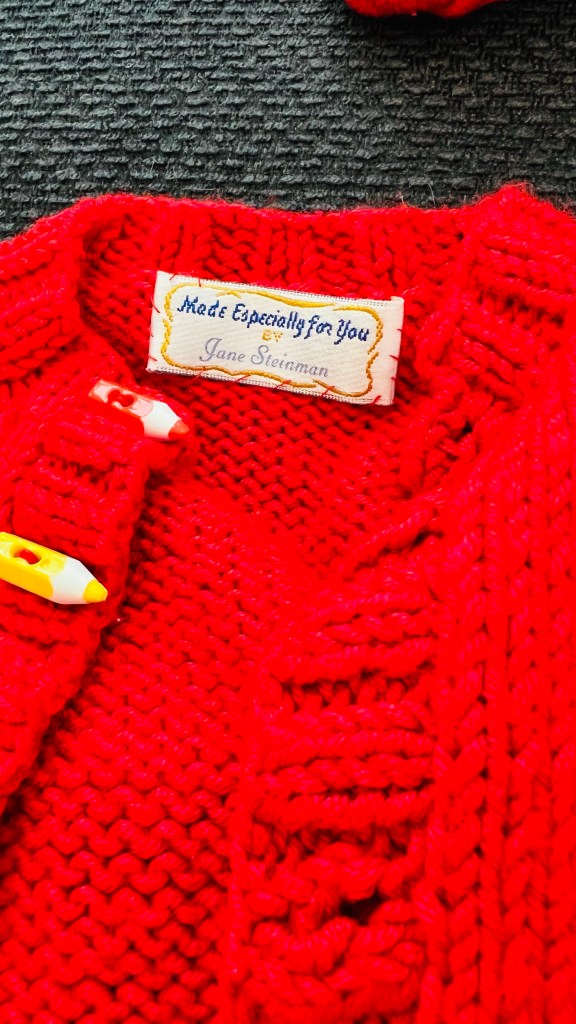
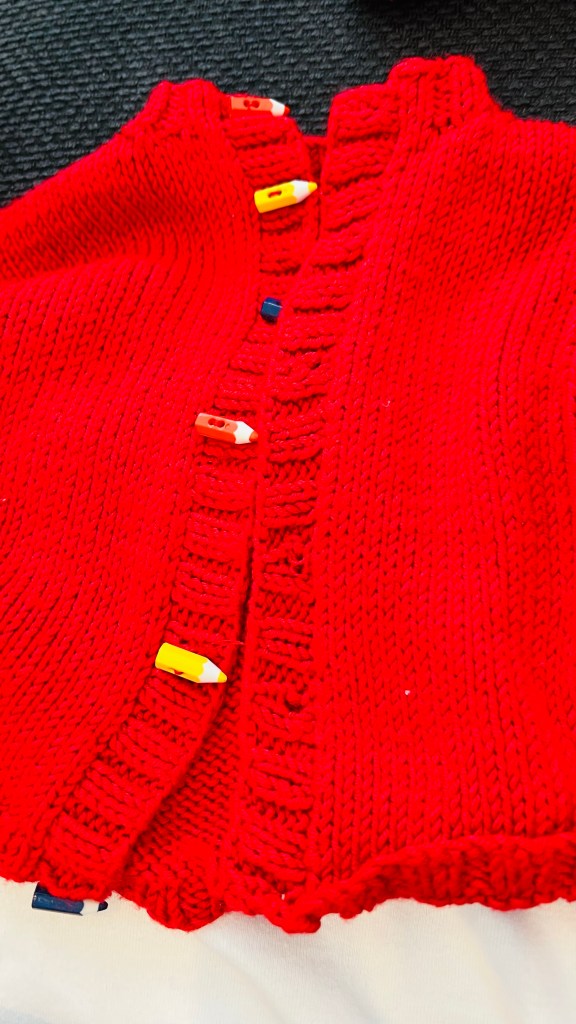
As with every garment of clothing this child wears, it was perfect. The yarn was soft from careful washing and gentle wear, the buttons just as you attached them, and your namesake’s big blue eyes shone. Your memory is alive in the stories we tell RJS, the pictures she sees, and in the music we sing. You would have laugh-cried when you saw her face as MY SISTER and I reenacted a childhood VHS tape from a music class, “the little red caboose.” RJS’s giggles of delight when we added her to the caboose were angelic.
And now, it is just days later, I pull out the candle, and I FaceTime my wife, and the tears flow for somehow 12 years went by in the blink of an eye. I miss you every day, Mom, and I love you forever.


Here is my Kol Nidre sermon.
Here is the text of my Erev Rosh Hashanah drash, Generous Hearts. Video to hopefully be included later.

This was my Shabbat sermon for Parashat Va-etchanan, Shabbat Nachamu, delivered at Temple Beth Shalom, Austin, TX.
On my summer vacation, I slept with shoes by the bed. As a former Californian, the land of earthquakes, this is nothing new to me. And still this was entirely different. As those of you who use social media and follow me know, I’ve just returned from a trip to Israel. My wife, Rabbi Denise Eger was co-leading a group of LGBTQ Christian clergy with an organization called A Wider Bridge. This group connects the LGBTQ community in the United States with the LGBTQ communities in Israel. Our trip started in Jerusalem and last Shabbat we were in Tel Aviv and then in the Galilee region in the north.
I am very blessed to tell you that I’ve traveled to Israel so many times I lost count as to what number trip this was. From the time I was 17 years old when I participated in Alexander Muss to today, whenever I am able to, I go to Israel. For my first year of rabbinical studies at the Hebrew Union College, staffing a birthright trip, leading congregational trips, I do not need an excuse. I love Israel.
I love the rolling hills, the coastlines of the Mediterranean, the Dead Sea and the Kinneret the Sea of Galilee that are so beautiful. I love the barrenness of the Negev desert juxtaposed by the ingenuity of the scientists and hard working people who made the desert bloom to produce life. I love the creativity of the scientists and the technology that now produces most of Israel’s drinking water through desalinization instead of from freshwater sources like the Jordan River. Fruits and vegetables taste better, the dairy products are phenomenal in Israel. The chocolate is pretty good too. I love shopping at Machane Yehuda or any of the open-air markets, is fun and delicious. It is so powerful to read a passage about King Saul on Mt. Gilboa and then going for a hike on the mountain or reading about Elijah the prophet in Carmel and seeing the ridge near the city of Haifa.
And don’t even get me started on Hebrew. I love the Hebrew language, speaking it sometimes poorly, understanding how new words are constructed, even. One of the main shopping streets in Tel Aviv is Dizengoff after the first mayor. When one shops on that specific street the Hebrew word is l’hezdangef – to shop on Dizengoff! Genius. There is so much that I love about Israel. I cannot wait to travel with you as we take a congregational mission to Israel next May, May 30 to June 7, 2023. I cannot wait to share with you this place that I love and to be with you as you discover for yourselves your own love list about Israel.
And like I love my sibling, there are things that make my relationship with Israel complex. As safe and ‘at home’ as I feel in Israel, I know that is not the experience of every person all the time. There is tremendous poverty, our Reform and Conservative congregations struggle against the chokehold of the Orthodox establishment that seeks to minimize our presence, our voice, and our rights. Israeli Arab citizens do not have all of the rights that they ought to and then there’s the situation. The “matzav”, the situation, the Occupation is ever present. Israel is not a perfect place. I do purport to you that everything is visible through rose-colored glasses. I am not naive and you ought not be either.
On my summer vacation, I slept with shoes by the bed.
Why, you ask? Because I was abroad I do not know what was reported on the news here so let me fill you in briefly. Last Monday, Israel arrested the leader of Palestinian Islamic Jihad, a terrorist organization in the West Bank. Tragically in the raid, a 17 year old was killed in exchange of fire. Tuesday, fearing retaliation for the arrest, Israel closed the roads in the south near Gaza. Israeli residents were told to stay home near their bomb shelters. They were only permitted to go to work if their office had a shelter. Tensions were very high all week and last Friday, Israel launched operation Breaking Dawn going after specific targets in Gaza. Friday afternoon Palestinian Islamic Jihad began launching rockets into Israel. Iron Dome, Israel’s missile defense system goes to work shooting down rockets that threaten any population in Israel. Last Friday as I prepared for Shabbat I could hear the booms of Iron Dome launching and the subsequent sound of it stopping a rocket.
Our group’s itinerary changed. We did not go to Sderot on the border with Gaza. We could not travel to Ramallah to meet with Palestinians. We made alternative plans and I always knew where I would go if I heard the siren to get to a shelter. I sent a text message to my dad and my sister to let them know that I was fine and what was going on in Israel and half-joked that international text messaging wasn’t available during my year in Israel during the second intifada. And I slept with shoes by the bed in case we needed to move to the hotel’s bomb shelter in the middle of the night.
In three days more than 1100 rockets were fired at Israel from Gaza. Sadly more than 200 fell in Gaza harming innocent Palestinians. More than 990 of them crossed into Israel and Iron Dome intercepted more than 380 of them, a 96% accuracy rate. And then there was a ceasefire.
Last Sunday was Tisha b’Av. The day we commemorate the destruction of the first and second Temple in Jerusalem. It is a day for mourning, weeping. It is also a reminder of baseless hatred. Our tradition teaches that it was this baseless hatred – sinat chinam – that led to the Temple’s destruction. And this year on Tisha b’Av a ceasefire was brokered.
This Shabbat for Jews throughout the world is known as Shabbat Nachamu. After Tisha b’Av, the sadness, the emotion, and the mourning we turn again to the Prophet Isaiah to learn. This special haftara begins “נַחֲמ֥וּ נַחֲמ֖וּ עַמִּ֑י יֹאמַ֖ר אֱלֹֽהֵיכֶֽם׃” – “Comfort, O Comfort My people says your God. Speak to the heart of Jerusalem and call out to her, for her term of service is ended, her crime is expiated.” It is not clear to any of the scholars who the prophet is speaking to, who precisely it was at the time that Isaiah sought to bring consolation. What is known is that it was needed then. And I can tell you assuredly that it is needed now, too. The Israeli and Palestinian peoples need comfort. We need assuredness that even in the midst of the complexities of our day, the complexities in our beloved Israel, the difficulties and the strife in our country, in our communities, and families, and in ourselves we can know solace.
On this Shabbat Nachamu may we be peace builders. May we find peace in our hearts and hold it within and share it with others. May each of us have the opportunity to travel to Israel, to meet peacemakers and to be peacemakers. And may we only sleep with shoes by the bed if it is going to give us a peaceful night’s rest. Amen.