
I am a text person. I don’t mean SMS messages. I mean the texts of our tradition. The Torah, the Jewish legal literature, midrash, theology, liturgy, Jewish fiction, and Jewish cookbooks. Maybe it is a professional hazard? Maybe it is just part of who I am as a person. Either way, our textual tradition is a crucial part of what it means to be a Jew.
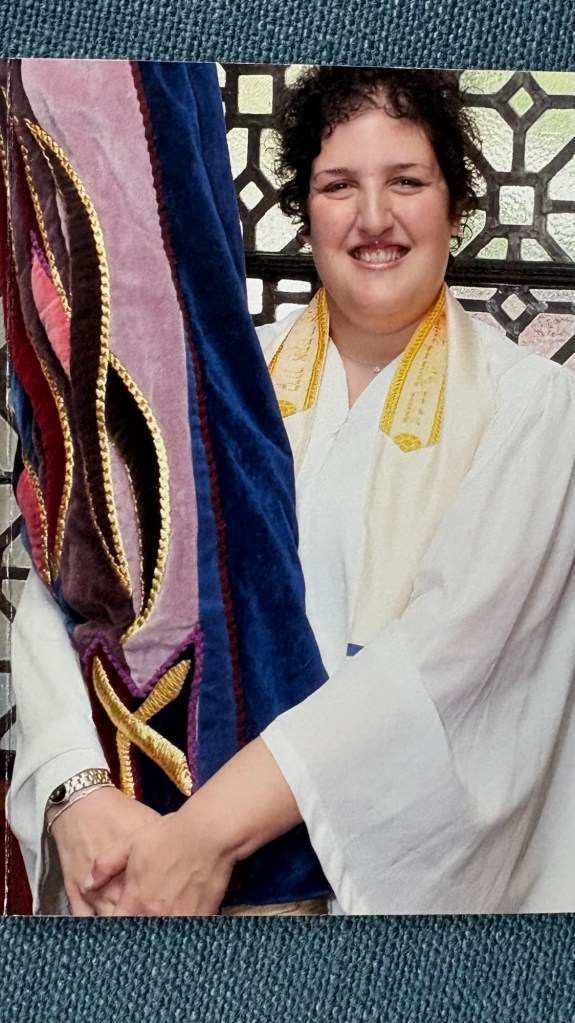
Part of my love of texts was fostered during rabbinical school. At the Hebrew Union College–Jewish Institute of Religion (HUC-JIR), text study was a crucial component of our study. It was fitting that texts, in particular, Torah texts were a special feature of the ritual of my ordination as rabbi.
In the description of the ceremony my teachers, both of blessed memory, Rabbi Dr. David Ellenson and Rabbi Richard Levy wrote:
each of our ordinees has set a Torah scroll to a section that represents an important teaching in their lives. After being ordained as rabbis, they will carry the Torah forth from the sanctuary, symbolizing the beginning of a lifelong journey to bring Torah to the Jewish people.
The teaching I selected 18 years ago at my ordination comes from this week’s parashah, Acharei Mot–K’doshim. This verse is in the section we sometimes refer to as the Holiness Code — the ethical expectations of our tradition on each individual to form a sacred, covenantal community. The verse I selected says “…do not stand idly as your fellow bleeds; I am YHVH,” (Lev. 19:16). There are other possible translations of this verse, too. “Do not profit by the blood of your fellow,” or “do not conspire against your fellow.”
I selected this verse because it charges the individual to take responsibility for others as a way to be holy. The ways we interact with other people, especially taking action when another is vulnerable, suggests that we can create holiness through response. I taught at the time, “the world would be a different place if each person sought out the holiness in the other people they encountered and refused to benefit from another’s abuse.”
Eighteen years later, I find myself returning to this verse not as a student carrying a Torah scroll into a sanctuary, but as your rabbi carrying it into the world — and into this community — week after week. The charge has not changed. The world still needs people willing to see the vulnerability in others and respond. The world still needs people who refuse to stand idly by.
This Shabbat, I invite you to ask yourself: where in your life is someone bleeding, literally or figuratively, and what would it mean for you to refuse to look away? Holiness, our tradition teaches, is not reserved for the sanctuary. It is built, one act of response at a time, in the ordinary moments of our lives.


