Will the pain ever stop?

Yesterday marked three months since MY MOM died. Every single day I miss her. Sometimes these moments take me by surprise. Like this Shabbat at services. I said the words of the Mourner’s Kaddish and I went off auto-pilot and just felt the raw, painful ache. It is always there. Sometimes I just do a better job of distracting myself so that I don’t have to feel it.

I understand that there will always be this ache. In time it will lessen. There will be moments throughout the year where it becomes acute. Birthdays, anniversaries, holidays.

Then there are the moments that are more acute. What’s impossible to anticipate are the moments that sneak up on me. A scene in a movie with a mother-daughter conversation, a cadence in a sentence, the flash of a picture, the taste of something.

I talk to MY DAD and THE DIVA almost everyday. It helps me. This whole business of ‘adjusting to the new normal’ is painful and slow.


Posted in family | 2 Comments

What are you reading?

I’m still having a hard time with the reading thing. I have a book by my bed (I almost always have a book or Kindle by my bed) to read before I fall asleep as I’ve done since I was a little girl. This book is taking a particularly long time and I’m pretty sure it isn’t the book. Maybe when I finish I will write my own review.

Anyway, I saw this great list of The 50 most essential works of Jewish fiction over the last 100 years.

1. The Metamorphosis (1915) by Franz Kafka

It’s really impossible to rate anything– especially the ultimate “Kafkaesque” work—any higher.  The Prague-born writer’s ultimate work about poor Gregor Samsa is one of the most seminal works of Jewish fiction in the last century.

2. In Search of Lost Time (1913) by Marcel Proust

Jews are naturally nostalgic folks, so simply replace the Madeleine with a rugelach and you might have one of the most Jewish works in literature.  And yes, Proust was a Jew.

3. Portnoy’s Complaint (1969) by Philip Roth

Trying to pick one book as the ultimate Philip Roth work isn’t as hard as you think.  Portnoy is the book you see every new title compared to, even to this day.  Goodbye, Columbus made him famous, but Portnoy made him a creepy god.

4. Death of a Salesman (1949) by Arthur Miller

Miller’s play tells the tale of Willy Loman, but also works as the perfect parable of the death of the American Dream.

5. The Catcher in the Rye (1951) by J.D. Salinger

No list dealing with best fiction of the last century would be complete without Salinger’s ode to teenage angst, and the limited knowledge we have of the late writer tells us that this book was indeed the product of Jewish neurosis.

6. The Trial (1925) by Franz Kafka

We recognize that we should have just said “Everything Kafka did” at the #1 position, but that wouldn’t have been fair, now would it?

7. Herzog (1964) by Saul Bellow

Same as the Herzog: It’s nearly impossible to pick the greatest work from the Ozick canon, but for the sake of argument, we’re going to pick The Pagan Rabbi as the must read collection by this brilliant writer.

8. The Pagan Rabbi and Other Stories (1971) by Cynthia Ozick

Same as the Herzog: It’s nearly impossible to pick the greatest work from the Ozick canon, but for the sake of argument, we’re going to pick The Pagan Rabbi as the must read collection by this brilliant writer.

9. A Contract With God (1978) by Will Eisner

Some call it the first graphic novel.  Others dispute that.  Nobody denies this work’s greatness.  Eisner’s semi-autobiographical short stories of Jewish life in The Bronx was called “something momentous,” by the LA Times.

10. Call it Sleep (1934) by Henry Roth

This is the quintessential Jewish experience of the ghetto known Lower East Side of the early 20th Century.  They should issue it to students in Hebrew school.

11. Angels in America (1991) by Tony Kushner

It’s almost scary how lacking the 1990s were of “generation defining” art by Jews.  Thankfully, Kushner’s tour de force play made up for that by being one of the greatest artistic works in the entire Western Canon, both literally and according to Harold Bloom.

12. The Collected Stories of Isaac Bashevis Singer (1982) by Isaac Bashevis Singer

We aren’t going to play around with the Nobel-winning writer.  His short stories are the first place you need to go to experience his true greatness.

13. The Amazing Adventures of Kavalier & Clay (2000) by Michael Chabon

The story of how Jews created the modern superhero might not be the most interesting idea for a story, but leave it in the hands of one of modern fiction’s greatest writers, and it’s an epic.

14. American Pastoral (1997) by Philip Roth

15. Are You There God?  It’s Me, Margaret (1970) by Judy Blume

A story about a girl growing up in an interfaith family, getting her first period, buying her first bra, and all the other fun issues that go along with being a teenager.

16.  The Odessa Tales (1931) by Isaac Babel

If there is any justice in this world, Babel’s work would be mentioned along with Tolstoy, Dostoyevsky, Gogol and any other great Russian writer you can think of.  Until then, it’s undisputed that he’s certainly the greatest Jewish writer the country ever produced.  These, his stories of Ukrainian tough guys in the waning days of Russian Empire, are his best.

17. The Assistant (1957) by Bernard Malamud

18. Catch-22 (1961) by Joseph Heller

In terms of the greatest dark humor anti-war novels, we’d pick Heller’s book over other Slaughterhouse Five or anything else you could think of.

19. The Brothers Ashkenazi (1936) by Israel Joshua Singer

We’ve stated on this website that Isaac Bashevis Singer was the most famous member of his family, but I.J. Singer was definitely the better writer.  Here, withThe Brothers Ashkenazi, he gave us one of the greatest snapshots of pre-World War 2 Jewish life in Eastern Europe.

20. Where the Wild Things Are (1963) by Maurice Sendak

Essential?  Isn’t every child issued a copy of this when they’re born

21. The Day of the Locust (1939) by Nathanael West

West (born Nathan von Wallenstein Weinstein) gave us the great Hollywood novel through the eyes of unforgettable characters.  The influence of this novel on writers from John Fante to Joan Didion is undeniable.

22.   Maus: A Survivor’s Tale (1986) by Art Spiegelman

The only comic book to ever win the Pulitzer Prize.  Art Spiegelman’s biography of his father’s life before, during and after the Holocaust, brought the medium to a whole new level.

23.  Goodbye, Columbus (1959) by Philip Roth

24. The New York Trilogy (1987) by Paul Auster

If anybody is looking for the post-modern mystery book of the last thirty years, look no further.

25. The History of Love (2005) by Nicole Krauss

Krauss’ second novel that launched her into the literary spotlight, is the story of a very old man and a very young woman, and how their lives are joined by one very special book. (Check out our interview with Krauss)

26. The Pawnbroker by Edward Lewis Wallant

The story of a holocaust survivor attempting to live with his demons will haunt you long after you’ve read it.

27. The Apprenticeship of Duddy Kravitz (1959) by Mordecai Richler

Henry Roth had the Lower East Side, Philip Roth New Jersey and Saul Bellow ruled over Chicago; but Richler wrote the greatest books about Jews in Montreal, and Duddy is his finest work.

28. Everything is Illuminated (2002) by Jonathan Safran Foer

Upon this book’s release, some called it “genius,” others said it was “overrated.”   We’d like to say that it is one of the finest works of “Post-Holocaust Fiction.”  Everything is Illuminated is a book for people who want to try and make some sense of the senseless.

29. Absurdistan: A Novel (2006) by Gary Shteyngart

As of the writing of this list, Mr. Shteyngart is 4 for 4 in terms of great novels, but the story of the very rich and very rotund Misha Vainberg, is his masterpiece.

30.The Nimrod Flipout (2006) by Etgar Keret

31.  The Man With the Golden Arm (1949) by Nelson Algren

32. The Street of Crocodiles (1936) by Bruno Schulz

Considered by many to be the greatest Polish writer of the 20th Century, Schulz’s masterwork is starting to peek back onto the cultural radar in the last ten years.

33. The Lazarus Project (2008) by Aleksander Hemon

The Bosnian-born Hemon might not be Jewish, but his novel juxtaposes a very autobiographical sounding protagonist with an immigrant Jew murdered in early 20th Century Chicago.  The Lazarus Project is impeccably researched, and written so well, that you’d think Hemon had been speaking English his entire life.

34.     Mind-Body Problem (1993) by Rebecca Goldstein

35.      The Tenants of Moonbloom (1963) by Edward Lewis Wallant

We’d suggest reading Dave Eggers’ essay on the book to better understand.

36. Motherless Brooklyn (1999) by Jonathan Lethem

Is it fair for us to say that Lethem’s 1999 novel set the stage for the current literary renaissance going on in the borough of Brooklyn to this day?  It certainly made the “Neuronovel” a trendy thing.

37. The Instructions (2010) by Adam Levin

If you’re going to make a big splash, write a 1000+ page book about a Jewish boy from the Chicago suburbs who might or might not be the Messiah.  That’s what Levin did with his debut, and that’s why it was our favorite work of fiction in 2010.

38. The Trial of God (1995) by Elie Wiesel

39. Bech, a Book (1970) by John Updike

The king of the W.A.S.Ps parodies his Jewish contemporaries, and gives the world the greatest work of “Jew envy.”

40. The Best of Everything (1958) by Rona Jaffe

It could be argued that this was the Sex and the City of its time.  But we think it’s so much more than that.

41. What Makes Sammy Run? (1941) by Budd Schulberg

Schulberg would go on to greater fame as a screewriter, but his story of Sammy Glick’s rise calls to mind TheDay of the Locust, Dickens andCitizen Kane, and is a must read.

42. Comedy in a Minor Key (2010) by Hans Keilson

It took about 100 years, but Hans Keilson was finally recognized as one of the world’s greatest writers.  This book about a young Dutch couple that takes in a sick Jewish man during World War 2–only to find themselves trying to figure out how to cover up his death–isn’t the sort of dark comedy that leaves you chuckling.  It’s the sort that makes you exclaim, “that’s brilliant.”

43. Landscape in Concrete (1966) by Jakov Lind

A story written by a Jew who survived World War 2 by posing as a Dutch citizen writes a story about a Nazi soldier’s quixotic journey to rejoin the war after being declared mentally unstable to serve.  Possibly the most absurd novel on this list.

44. Homeland (2004) by Sam Lipsyte

If you check back with us in ten years, Sam Lipsyte will have replaced Philip Roth as the writer that everybody copies – whether they know it or not.   Bookslut described Lipsyte’s third book as “disturbing and comforting,” and summed up his style quite well.

45. The Finkler Question (2010) by Howard Jacobson

Salon said the underdog Man Booker winner in 2010 would “probably distress you on its way to disarming you.  Can we pay the novel any greater compliment?”  We don’t think so.

46.   Seize the Day (1956) by Saul Bellow

47. The Collected Stories of Deborah Eisneberg (2010) by Deborah Eisenberg

Eisnberg is one of the greatest living short story writers.  Do yourself a favor and read everything. 

48.  The Carpetbaggers (1961) by Harold Robins

49. Witz (2010) by Joshua Cohen

The Jewish Ulysses?  Some have said that’s the case.

50. The Extra Man (1998) by Jonathan Ames

I have to admit that I have only read about 40% of these titles. If I had to pick one that was most essential I think I would have to go with #15, Judy Blume’s Are You There God? It’s Me, Margaret.

From this list, what would your pick be and why?

Posted in Uncategorized | 1 Comment

Ruminating on technology

The past several days Jewish educators from all over were in Seattle learning about technology and Jewish education. (If you are on twitter, you should check #nateseattle for some of the discussion). I am incredibly impressed with the work that so many are doing and I can’t wait to learn more from TS educator extraordinaire who was in attendance. If you want to see their conference website, go here.

Technology is completely fascinating to me. I really like all of the computer, iPad, smart phone stuff that it is possible to do that I couldn’t have dreamed of ten years ago. There are a few struggles that I continue to wrestle with. I’d love to know your thoughts.

1. Can I use an iPad on the bima to preach from? There are several different teleprompter programs. I am completely intrigued by this idea because it would eliminate lots of paper usage, perhaps enable me to make better eye contact with the congregation, and engage people in more advanced ways. There are several drawbacks. First, because I am using a digital device, this does not mean that it is appropriate for congregants to do so. It is often distracting, incredibly rude, and no matter how much the average teenager tries to hide what they’re doing, completely obvious from the bima. I have not yet used an iPad because of the mixed messaging.

2. Where is the happy medium? There are many people, like me, who think all of this technology is awesome. They read e-zines, follow blogs, and try out new things. There are lots of other people who do not feel comfortable with technology. Perhaps they don’t like change, dislike interacting with machines more than people, are overwhelmed by the possibilities, etc. What is the obligation of a community, even more important, a sacred community to bring everyone together?

What are your thoughts on technology? Do you have similar questions or is it just me?

Posted in facebook, technology, Temple Sinai | Leave a comment

If the pope says it is okay…

Then it must be!

That’s right, dear readers, Pope Benedict has given social networking his blessing. Don’t go looking for his holiness on facebook, apparently he doesn’t have a personal page.

I do. Are you my facebook friend?

Back to the pope. He correctly advises that virtual friends do not and should not replace real human contact. There is still something vitally important about having conversations that don’t involve screens.

The pope also cautioned against creating a false public persona. I think that he is right on here (you might want to write this down that I agree with the pope on something). It is vitally important to remain authentic in a virtual world. For example, I am still guilty of the spacing problem. Forgive me blogosphere.

The bigger questions for me and I think the entire world are how to translate and use social networking to enable the next stage of a relationship. How can we use social networking to connect and then gather to create meaningful experiences like gathering together for a common justice cause or joining together in prayer?  What are your thoughts?

Posted in technology | 1 Comment

I am guilty of the double space

I just didn’t know.

After reading a recent article in Slate, I learned that I am making a huge mistake possibly hundreds of times everyday. Until this very blog post, I always put two spaces after a sentence. I remember someone, probably a teacher telling me it was the ‘right’ thing to do.  Now I wish I remembered what teacher so that I could write them a letter with one space after a period and tell them what’s what. Eek. I just did it again and had to backspace.

If you are interested in reading the article, here it is. Thank you for your patience as I attempt to correct this apparently bad habit.

If I’ve offended you with my double spacing after a period, please accept my sincere apologies. I am working on it. I promise.

Posted in technology | 3 Comments

Tu b’Shevat higia! Tu b’Shevat is here!

Tonight begins the 15th day of the month of Shevat.  In Jewish tradition, this is one of four New Years.  That’s right, there are four new years.  15 Shevat is the new year for trees (if you want more info on this look in Mishnah Rosh Hashanah 1:1).  There are many customs surrounding this holiday, mostly centered on the Land of Israel and celebrating trees!
I will of course share that at this very moment it is snowing in Toronto and the thought of planting trees is quite absurd at this time of year (though I guess starting with a seed and working up from there to put a sapling in the ground come spring is possible).

In the Torah there is a description of seven species that can be found within the land of Israel.  They are: wheat, barley, pomegranate, fig, honey, olive, and grape.  As part of the Spirits with Sinai event tonight, I’m going to order, or attempt to order a drink for each of these species.  My thoughts are:

Wheat beer, another beer (barley based will be the assumption), pom-tini, honey beer (or maybe hot tea with honey), wine, dirty martini, and then there is the fig.  I’m just not sure what to do with this one, though if there were fresh figs around it could be a garnish on something, I’m sure.

Anyone have an idea of what to do with the fig?  What other drink concoctions can you think of?

I hope however you celebrate, your Tu b’Shevat is a meaningful reminder of the power of nature in our lives and the importance of the trees all around us!

Posted in holidays, Israel, Temple Sinai, Torah | Leave a comment

It is international KJ appreciation day!

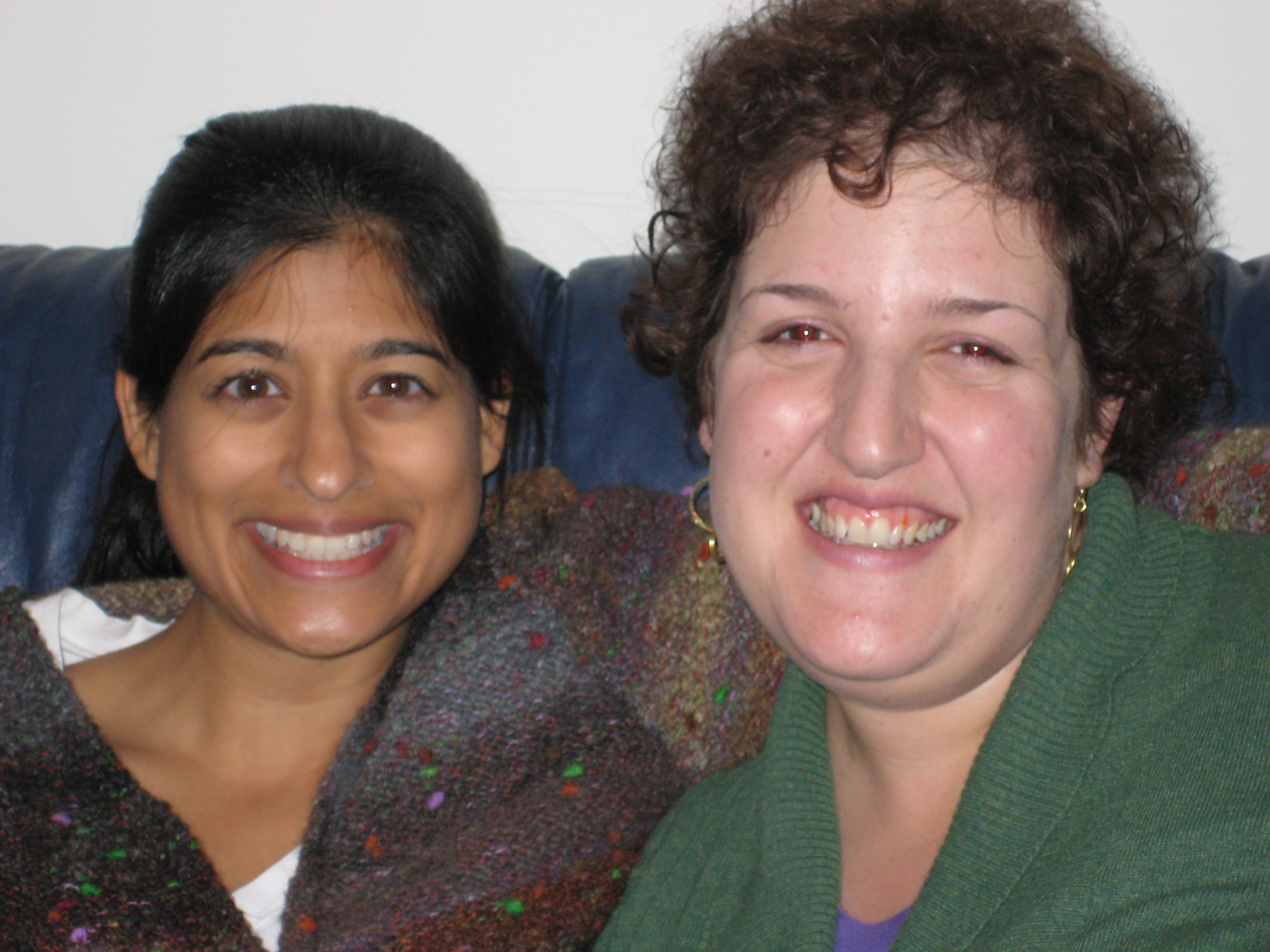
Today is my BFF, KJ’s birthday!  Though this special list has typically been reserved for immediate family in the past, I am breaking a new trend because KJ is in the T-dot!  I get to spend this special day with her.

Some background for all of you who don’t know KJ.  She and I lived on the same first-year hall at our alma mater.  We became fast friends doing the things freshman in college do (ie going to eat meals together because heaven forbid anyone eat alone, staying up late watching silly television, and studying.  Lots of studying!)  Our friendship has lasted all of university, then living in different cities ever since including some international adventures!

Without further ado, 16 things I love about KJ.

1.  KJ has a fantastic laugh.

2.  Your fashion sense is unparalleled.  Though our taste is different, you can always give me thoughtful opinions on a something important, like new shoes.

3.  You are super smart.  Who else has a masters in tax, is a CPA and is now getting CFP credentials?  Seriously, no one loves learning more than you.

4.  You love your family.  Having met them, I can attest that there is lots to love.

5.  When you like a song, you really like a song.  Ever since I’ve known you, there is often a song playing on repeat on your CD player, iPod, or other listening device.

6.  You’re an excellent dancer.

7.  Whenever we are together, which unfortunately isn’t often enough these days, we have the best time catching up, laughing and eating good food.

8.  It is not uncommon for us to send a bzillion emails to one another throughout the day.  Sometimes about nothing of importance.  Other times about really important things, like what happened on a television show.

9.  Though you’re not Jewish (which alone could be one thing that I love about you) you know more about the Kosher laws, observing Shabbat and most Jewish holidays than most Jews.

10.  You love our iPhone, Macbook and want an iPad just like me (no I don’t have a iPhone.  You’re cooler than I am.  I’ve always known that).

11.  No matter what, I can always call you.  It doesn’t matter the time of day.  When MY MOM died, I called because I didn’t know what else to do and you were totally present for me throughout the darkest days of my life.

12.  When your employer wouldn’t let you leave to be with me and my family for MY MOM’s funeral, we brainstormed and came up with this much better plan that included you visiting right this second.  Hooray!

13.  You change your eating habits almost as often as I do.  Vegetarian, no lactose, yes to chicken, etc.

14.  You have impeccable taste in friends.  I guess that is obvious. 🙂

15.  You show up when it counts.  Whether it is on the phone and checking in.  An encouraging email or being physically present, you are a phenomenal friend.

16.  You love to travel and together we like to plan trips.  Though we didn’t get to India together for our 30th birthday year I think we can count on planning a trip together soon.

There are so many more reasons, of course that I love KJ however these 16 will have to do.  I hope that you have a stupendously fun birthday and a year filled with adventure, love and happiness.

Posted in family, memories | 2 Comments

I don’t love the iPad

I hope that you are sitting down.  This post is going to shock you.  It almost shocks me and I’m the one writing it.

I was fortunate to spend the end of December with THE DIVA and MY DAD in Southern California and to attend a rabbinic conference.  In an attempt to pack light and not to be too connected, I decided to leave my laptop and kindle at home and traveled with the iPad I got but never wanted.  I bought the Apple bluetooth keyboard, and figured that for any emailing and note taking I would be covered.

I must confess I was not entirely pleased.  Note that I do not have the 3G iPad.  It works with wifi and I didn’t always have wifi available to me.  I found the iPad somewhat cumbersome to tote around (which could be do to the case I have which is also a stand).  Lots of people were extremely impressed with my mobile office.  I just didn’t feel as productive.

I missed my MacBook.

The iPad seems like a fun toy.  It just didn’t do all of the things that I am accustomed to doing on my laptop in as efficient a way.  I did use ibooks and am still finishing a book.  Even for that, I prefer reading on the kindle a lot more.  The kindle is lighter and I find the e-ink easier on the eyes.

For my purposes, the iPad is seeming much more like a cool toy than a practical device for my purposes (mostly email, social media, and writing documents).

I’m not sure what I will do when I travel again.  What are other people finding they do?  IPad and laptop?

Posted in family, technology, Uncategorized | Leave a comment

Those who sow in tears will reap in joy

Debbie Friedman, z”l, died on Sunday.  Her funeral is today at 11am in California.  The Jewish world has lost an immense talent who transformed the nature of prayer in our synagogues and taught a generation how to pray.

There are a lot of things to say about Debbie, many of them have been written and I will link to them at the bottom of this post.

I got to know Debbie when she served on the faculty at the URJ Kutz Camp.  There we hung out together.  I have a particular memory of going to The Creamery just outside of Warwick and enjoying a delicious summer ice cream treat.  Debbie had a wicked sense of humor, listened intently, and made everyone in her presence feel like her best friend.

Significantly though, I remember Debbie doing what she does best, teaching.  On Friday night I was leading the camp in Birkat Hamazon. Camp recently acquired new tables constructed of plastic which made an incredibly powerful sound when over 100 teenagers were pounding upon them in rhythm.  The noise was overwhelming, no one could hear the sound of the grace after meals.  Debbie stood up and stopped the prayer in its tracks.  She told the room, “this is a prayer!  Do you know what you are saying and banging your tables to the words in praise of The Creator?  Please stop!”  Seamlessly I picked up where I left off in the prayer and the camp culture was forever changed.  (And yes there are other versions of the story and individuals who did not see this as a positive, teaching moment).

Of course I attended her concerts, too.  I remember in high school she returned to the synagogue of her youth which we share, Mount Zion Hebrew Congregation and took the bima where she first sang her Sh’ma and Ve’ahavta.  I knew most of the words to her songs because they are the songs of my Jewish experience.

When I learned of her death I was talking to my sister and we reviewed many of her songs.  I reminded THE DIVA that she wrote “The Alef Bet Song,” yes, it is Debbie’s tune that taught thousands of children the letters to the Hebrew Alphabet.

MY MOM’s favorite was “L’chi Lach.”

I am always moved by “Those who sow,” using the words from the Psalm 126:5 the words are “Those who sow in tears will reap in joy.”  I like the verse so much when I was gifted a tallit for my ordination, I put this verse on the atarah.  For the past several days Debbie’s tune has been running through my head constantly.

I wouldn’t want it any other way

Debbie, you shall always be a blessing.  T’hi zichra baruch.


Have a tribute to write to Debbie of your own?  Go here.

NPR did a story.

Danny Maseng shared his memory.

Rabbi Denise Eger did.

Rabbi Paul Kipnes did.

BZ had thoughtful remembrances, too.


Posted in memories | Leave a comment

In Toronto on Sunday? Come to this!

Click here for more information.

Posted in Israel, Peace, Politics, tzedek, Uncategorized | Leave a comment